
FOR YOU
EUROPEAN PERSPECTIVE.
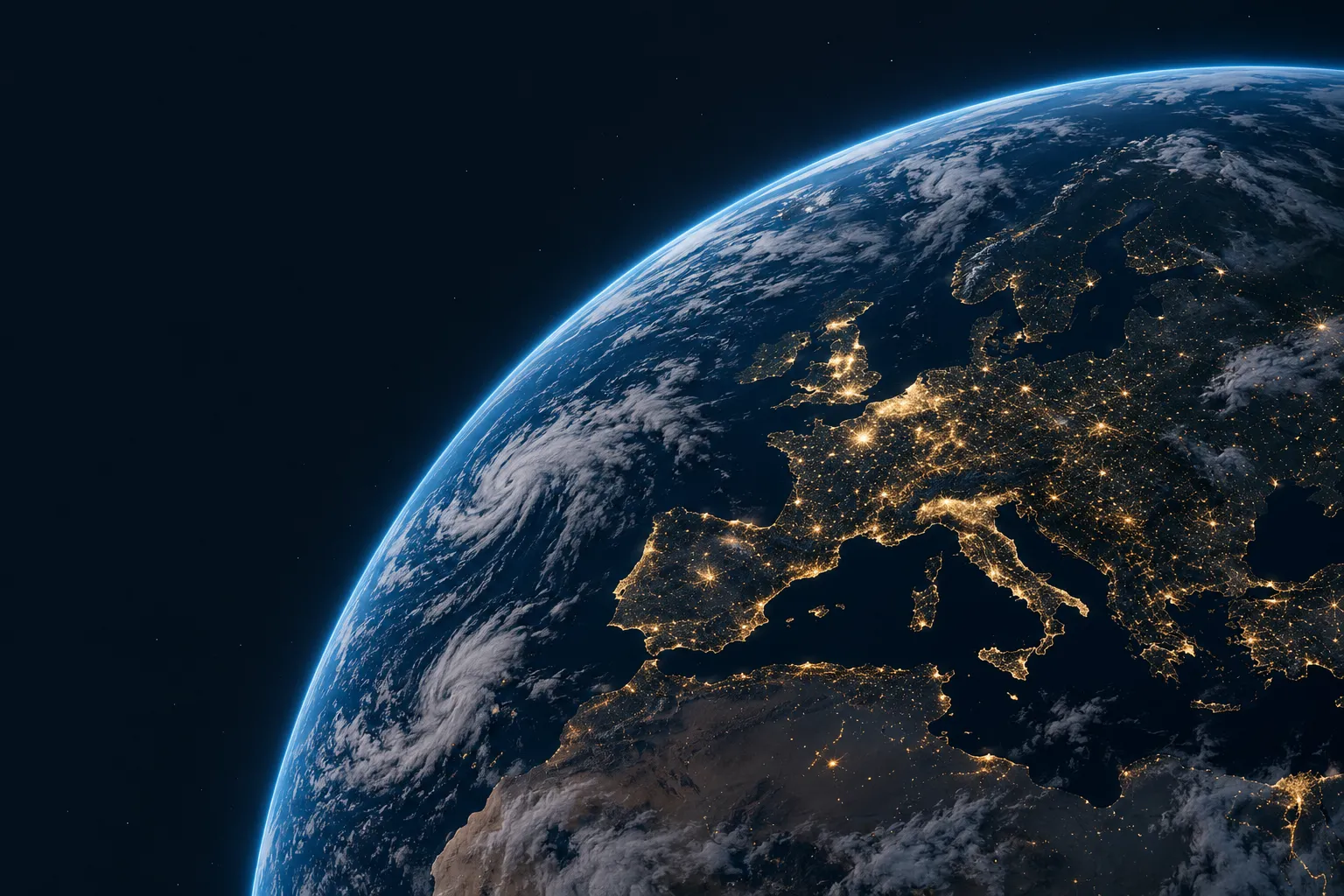
Europe in space.
Closer than you think.
Track European rocket launches, find the ISS over your location and discover where Europe relies on partners in space.
Current launches. Traceable sources.
NEXT LAUNCH
Loading Launch Schedule …
ISS ABOVE YOU
When do you see the space station?
Choose your location once – we calculate the next viewing windows on your device.
Select location →CAN EUROPE DO IT ALONE?
Europe's capabilities
DISCOVER MISSIONS
New sources and next stages
The source status is automatically compared.
View missions →COPERNICUS
New from space
The latest suitable images in our city selection. Your saved cities come first.
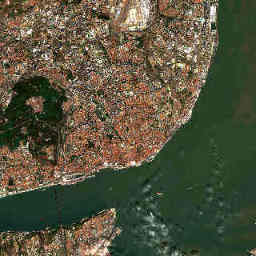 LisbonAcquired on 28 Oct 2026Contains modified Copernicus Sentinel data 2026.
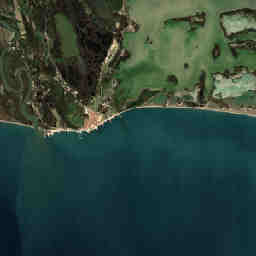 CamargueAcquired on 28 Oct 2026Contains modified Copernicus Sentinel data 2026.
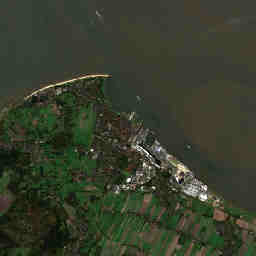 Wadden Sea near CuxhavenAcquired on 28 Oct 2026Contains modified Copernicus Sentinel data 2026.
Copernicus Sentinel-2 · Small image crops, not live imagery. Acquisition and source checks have different dates.
Explore all satellite images →THIS WEEK
What happens next
Selected dates, observation tips and picture stories.
To weekly overview →LAUNCH PLAN
Europe's next launches
All launches
Loading Launch Schedule …
How to read our schedules
Many launches are only roughly planned – e.g. for a quarter or a year. That's why we show the accuracy of the source: 'Earliest 23.11.' means daily planning, 'Planned for 2027' only a rough estimate. All dates can change. Only exact-date dates go into the calendar.
“European” here also includes the United Kingdom, Norway, and Switzerland; Kourou in French Guiana is counted as a European launch site. The assignment of satellites comes from the source and may be incomplete.
Source: Launch Library 2 / The Space Devs, updated regularly. Further terms explained by Glossary →
REVIEW
Europe's last launches
What became of the planned launches?
The result as reported by the source.
Review is loading …
ISS SEE
The ISS. About your location.
A bright point in the sky. People in orbit.
Find the next possible viewing windows over your location.
CHOOSE YOUR OBSERVATION LOCATION
Dark sky · ISS in the sun · at least 10° above the horizon
Your window to the space station.
Choose a city, use your location or enter coordinates. We calculate the next possible viewing windows for up to three days.
For this purpose, your location, rounded to 0.5°, is sent to our server and, if necessary, to MET Norway. Your IP address is not passed on. The selection only applies to this visit. Without weather, the orbit calculation remains on your device.
Orbit data: CelesTrak / NORAD · Visibility is estimated; weather is not taken into account.
How are the viewing windows created?
ISS observe: instructions and frequently asked questions →
We calculate the ISS orbit with the SGP4 model from current orbital elements. A section is considered visible from 10° altitude, if the sun is at least 6° below the horizon at your location and the ISS is almost fully illuminated. These thresholds are a practical selection, not a guarantee of visibility. Clouds, obstacles, and orbit manoeuvres can change the result. Local time refers to the time zone of your browser, even if you select a city in another country; alternatively, you can choose UTC.
The orbit data is retrieved centrally at most every two hours. Data older than 72 hours is rejected for new predictions. The forecast calculation covers at most 72 hours and ends at the latest 96 hours after the orbit epoch.
CelesTrak · orbit data ↗Satellite.js · MIT license ↗ORBIT IN 3D
Europe in orbit. Discover what connects us.
Discover satellites with European involvement.
Drag to rotate
Two fingers to zoom
–
Calculated position · UTC
Orbit data is being loaded …Data & hints
Calculated positions from orbital elements, no live observation. Satellite points are greatly enlarged.
Orbit data: CelesTrak / NORAD
The positions are calculated on your device from public orbit elements (SGP4 model). These are calculated positions, not live observations. Deviations depend, among other things, on the age of the orbit data and orbit manoeuvres; the graphic is not a navigation instrument. Our server retrieves the orbit data from CelesTrak at most every two hours. Your device loads them only from us. The retrieval time and age of the individual orbit elements are specified separately.
The selection includes satellites from Galileo, Copernicus-Sentinel, Metop, and Meteosat, as well as the international space station ISS. It is not a comprehensive overview of all European satellites and does not make any statement about the current operational readiness of each instrument. The satellite points are greatly enlarged, their distances from Earth follow the model. The drawn line shows the orbit with the Earth's rotation held constant, not a ground track. The time-lapse ends at the latest 24 hours after "Now". Outside of the visible view, the calculation pauses.
Operation: Dragging rotates the view, two fingers or the mouse wheel zoom. Alternatively, camera controls, search and satellite list are available. On the focused graphic, the arrow keys left/right; up/down and plus/minus zoom. The clock shows UTC. Earth image: NASA Earth Observatory (Blue Marble, Black Marble).
CelesTrak · orbit data ↗three.js · MIT license ↗Satellite.js · MIT license ↗All satellites in the list
FURTHER OUT
Europe's research goes beyond Earth.
These missions do not belong in Earth orbit. Discover their targets in the mission profile.
TO THE MARS MOON PHOBOS
Idefix · MMX
A German-French rover on a Japanese mission.
View mission →TO JUPITER'S ICE MOONS
Juice
On the way to the Jupiter system and its icy moons.
View mission →EUROPE IN NUMBERS
Europe's rockets since 1965
All orbital launches of European rockets –
from Diamant to Ariane 6 and Spectrum.
Data status being checked …
European rocket launches per year
Orbital launch attempts including failures
Display as table
Europe's share of all orbital launches worldwide
European rocket launches divided by all orbital launch attempts of the year
Display as table
Success balance per rocket
Orbital launch attempts, sorted by first flight
Display as table
Data being loaded …
EUROPE'S INDEPENDENCE
Can Europe do that alone?
What Europe operates itself,
where partners are needed and what is still missing.
Who operates the satellites, who builds the rockets? This is about control over the entire system. Individual components can still come from other countries.
MISSIONS
Missions and their purpose
From weather data to Jupiter research:
Who is behind it and what the mission is for.
Portraits with editorial background; current sources are automatically compared.
THE HISTORY
Europe's way back into space
From the launch gap to the first orbital launch
from the mainland – in five years.
Key figures and source status are automatically taken from the statistics.
THE NEXT STEPS
Plans from sources
Recorded launch dates and mission stages.
Plans may change.
Source-backed plans are compiled from the sources.

DON'T MISS OUT
European launches in your own calendar.
Subscribe to dates, note launches and find the ISS over your location – also as an app on your mobile.
YOUR WATCHLIST
Bookmarked launches and missions
0Bookmarked launches
0Mission profiles
0New changes
Saved on this device.
Without registration.
YOUR LAUNCHES
YOUR MISSIONS
Your selection remains on this device.
Automatically translated from German; some interface labels are reviewed. View original →. Some new text is still available in German.